In this chapter
In this chapter
The residents turn up
The creature experiments in chapter eleven needed a launch flag. The next version enabled them in normal play, with a Creatures switch in Scenery for anyone who prefers an empty town. That choice is saved as a personal preference, so it does not change the scene or become an undo step.
Ducks now wait for land. The old habitat fallback treated an empty canvas as a pond ready for eight birds. Removing that fallback means there has to be a shore to settle beside. Build a small island and the ducks can arrive; erase it and they leave. Undo brings the habitat back.
The cat also got another pass. Its cream chest and stripes needed to sit cleanly on the mesh, and the first colour correction still left it too bright. A later adjustment sampled the orange tabby reference and reduced the material brightness. The outline now widens as the camera gets closer, so the face stays readable. The close-up below shows that later version.
Borrow the camera, then give it back
Photo mode now switches an orthographic editing view to a twenty-four-degree perspective lens with gentle depth of field. Leaving restores the editing view, including its focus and aperture. A photographic orbit or zoom should not leave the player somewhere else when they return to building.
The framing needed more care than swapping the projection. In the canal quarter, the old orbit target sat roughly seventeen metres behind the buildings. Using it as the perspective pivot made the foreground much larger. A five-by-five grid of sight lines now estimates the depth of the scene from the first building or land each ray meets, then uses the median to move the pivot along the viewing direction.
The first version used full editor picking and took around 100 milliseconds on Harbour and 380 on the quarter. Simpler box and terrain checks brought photo entry down to recorded medians of 2.5 and 4.4 milliseconds, with 18 on the dense scene. This is work paid once when entering photo mode, not every frame.
Photo field-of-view keys now affect a temporary lens value. Normal saves made during a photo session retain the editing camera. One edge case remained in review: opening another scene while already in photo mode could save that scene with the photo orbit. The blur still estimates depth from a ground plane, and lamp selection can change abruptly on entry.
A window changes its mind
A release-performance change seemed to alter the brightness of some windows. The meshes and materials matched, yet the pictures did not. Repeated captures of the older version eventually showed both bright and dim panes, so the difference was already there.
The glass, its additive light pool and its halo were surfaces of one cluster mesh. They shared a sort depth, leaving the renderer without a fixed order for those transparent surfaces. When glass drew after the pool, it dimmed the result. A small change elsewhere in the draw list could flip the order.
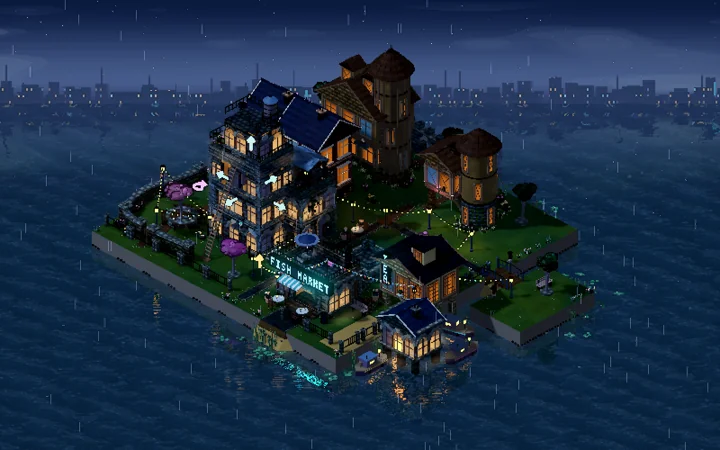
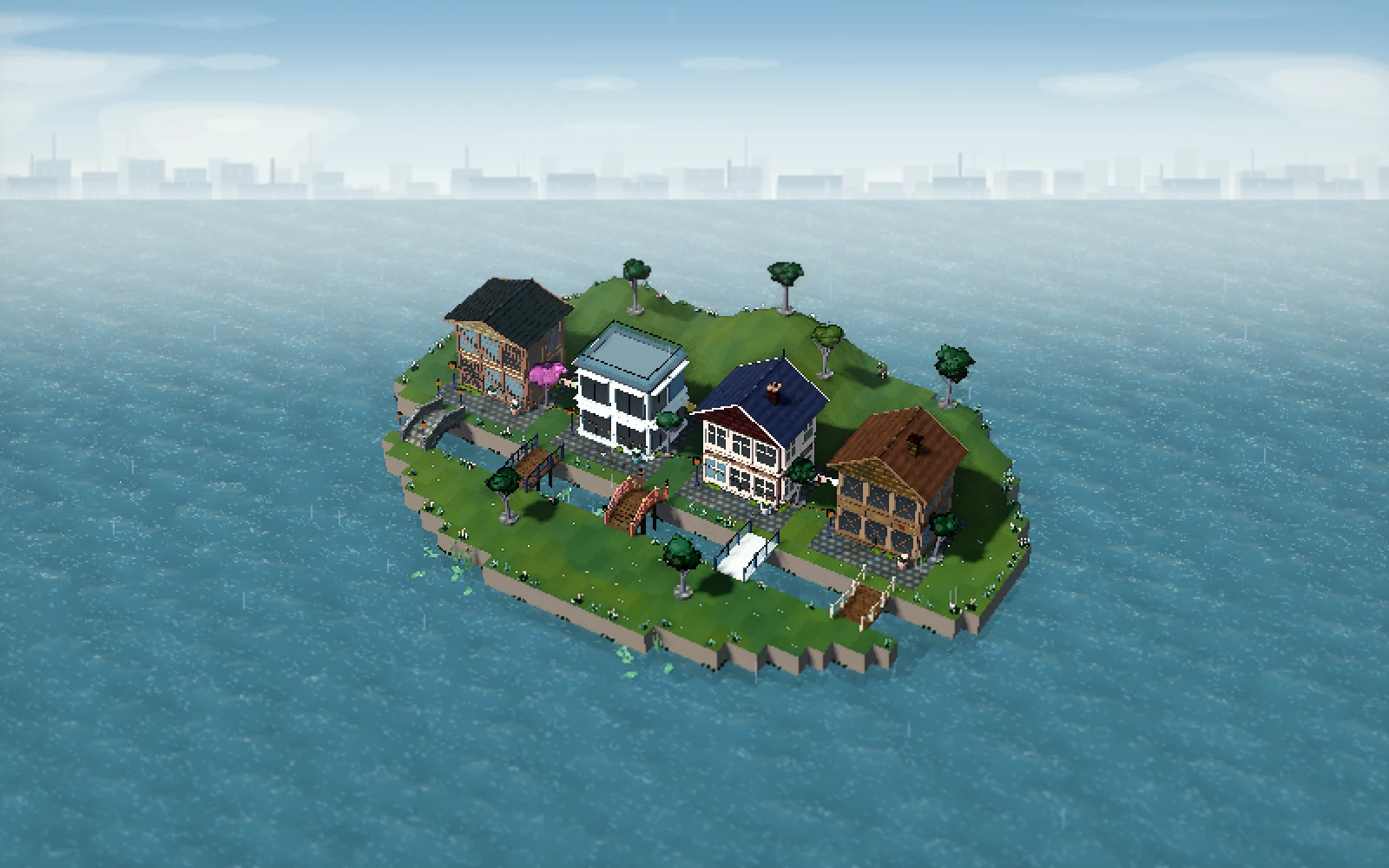
The repair gives glass an earlier render priority. The canal quarter’s windows became consistently brighter, including windows that had appeared dim throughout the earlier look and camera experiments. Those older pictures remain in the journal because they show the versions actually being judged at the time.
The fix has a wider consequence: an additive halo behind other glass is no longer dimmed by that glass either. The standard scene comparisons showed no visible issue from that side effect, but it is still a rule of this approximation.
What happens after you let go
Releasing a drag used to collect a lot of work in one frame. The new path builds the geometry first, then schedules derived details over later frames. Ivy can reuse a cached result for an unchanged building instead of growing again from scratch.
In the first alternating comparison, Harbour’s release with animations fell from 92.0 to 26.7 milliseconds, and the dense scene without animations fell from 348 to 90.8. The targets were not all met: the worst dense slice still took 17.7 milliseconds against an eight-millisecond target. The improvement was kept with those misses recorded.
Spreading the work also makes the delay visible. Planting and lights can briefly remain at the old position while the queue catches up, roughly 0.2 to one second in the reviewed cases. Entering photo mode or taking a photograph finishes that pending work first, so a saved picture does not catch the scene halfway through settling.
From the project notebook
This chapter draws on the project’s records as they stood on 25 September 2026.
- docs/visual-handoff.md · P1a, P1b, P1c and P1c2
- docs/visual-handoff.md · 24 September cat revision
- artifacts/feel/16-P1/c/probe/release-results.txt
- artifacts/owner-0924/cat/final/