In this chapter
In this chapter
Trying a softer day
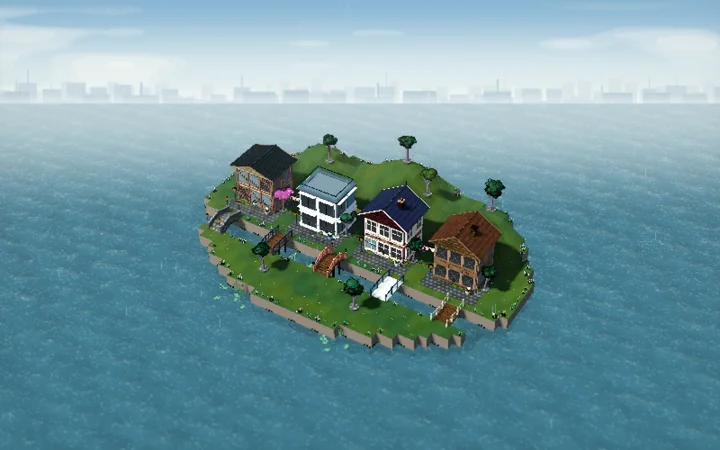
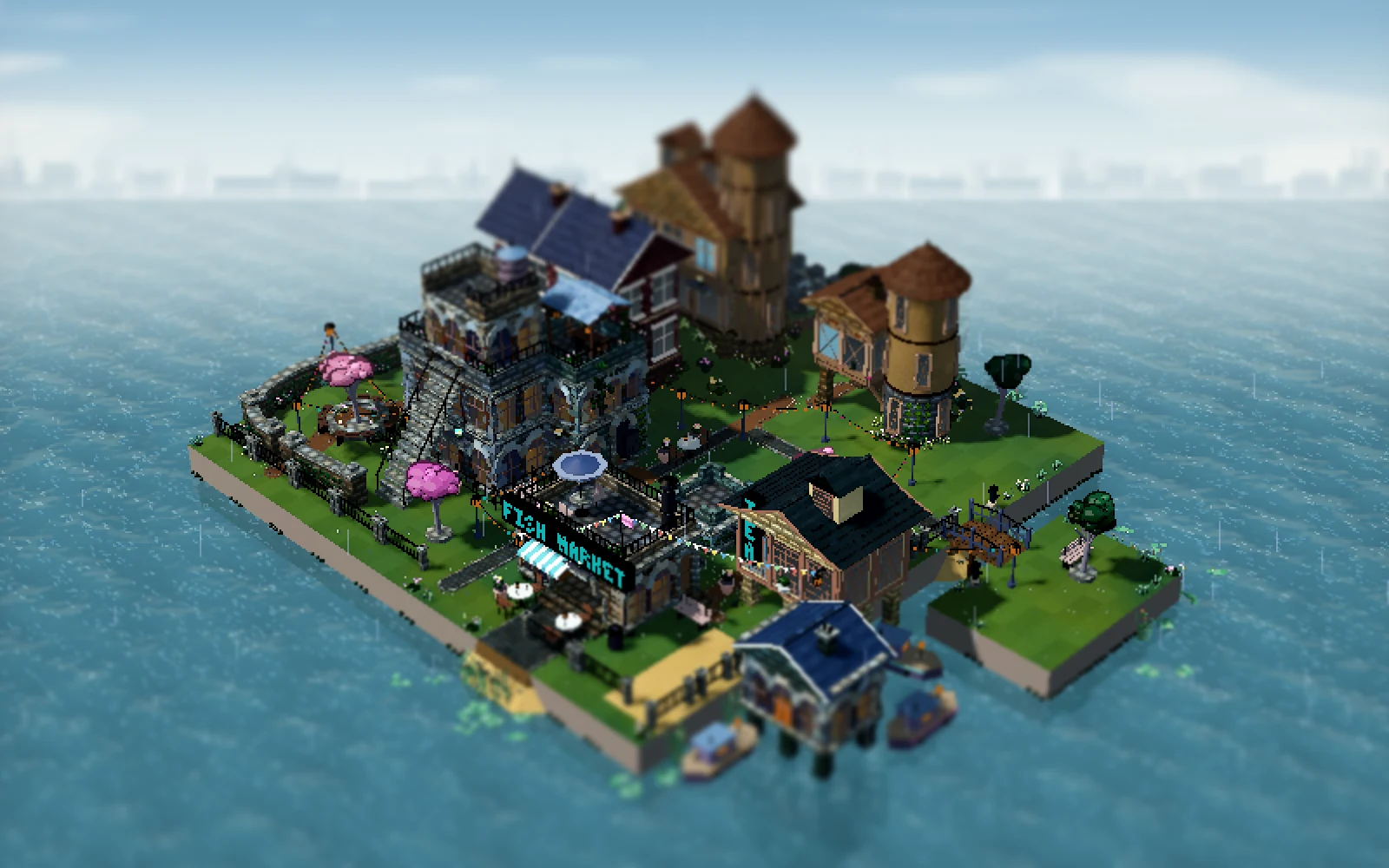
The next experiment added an optional Glade look alongside the existing Canal night profile. Choosing it switches several settings in one undoable edit: full-resolution presentation, daylight, dry weather and the miniature lens. The original Canal night look remains the default.
Foliage shading becomes smooth, sunlight warms up, and more ambient light softens the shadows. Outlines and water glitter are reduced. AgX returns here with a new exposure and contrast setup. The earlier material experiment in chapter four rejected it at the exposures used then; this trial changed those conditions.
Contact shading needed its own work. The engine’s ambient occlusion was too close to noise in the comparison, so the pass used sixteen depth samples arranged in two rings, over a radius of about seventy centimetres. It helps a wall or bench sit on the ground, but every depth read has a cost.
The ground was too busy
The first review sent the look back. Denser grass and its contact shadows made the meadow speckled, while the paving competed with the walls. Harbour also lacked a clear focal point. Adding detail had made it harder to decide where to look.
The repair reduced small ground marks under Glade, lifted the ground’s value and stopped grass blades from shading one another in the contact pass. It also removed a small per-cell colour step that became a checkerboard once the rest was calmer. Canal kept its existing appearance.
The revised look took 11.3 milliseconds per frame in Harbour against 7.7 for Canal day, and 20.0 against 14.7 in the dense scene. These were local measurements after the ground changes. The softer picture still needed optimisation. Its focal point, cyan sky and water, and visible tuft pattern also needed another look before deciding whether to keep it.
A lens changes the town
The camera experiment kept orthographic projection as the editing default and added an optional perspective view. Its default lens is a narrow twenty-four degrees. It frames the same number of metres at the target, which keeps the existing camera-size setting useful.
That promise reaches surprisingly far. A perspective camera needs handles sized for their own depth, zoom maths that holds the point under the cursor, and height-drag planes that face the eye. Fog and clip distances must follow the camera. Water reflections need a reflected ray for each fragment because the viewing direction now changes across the screen.
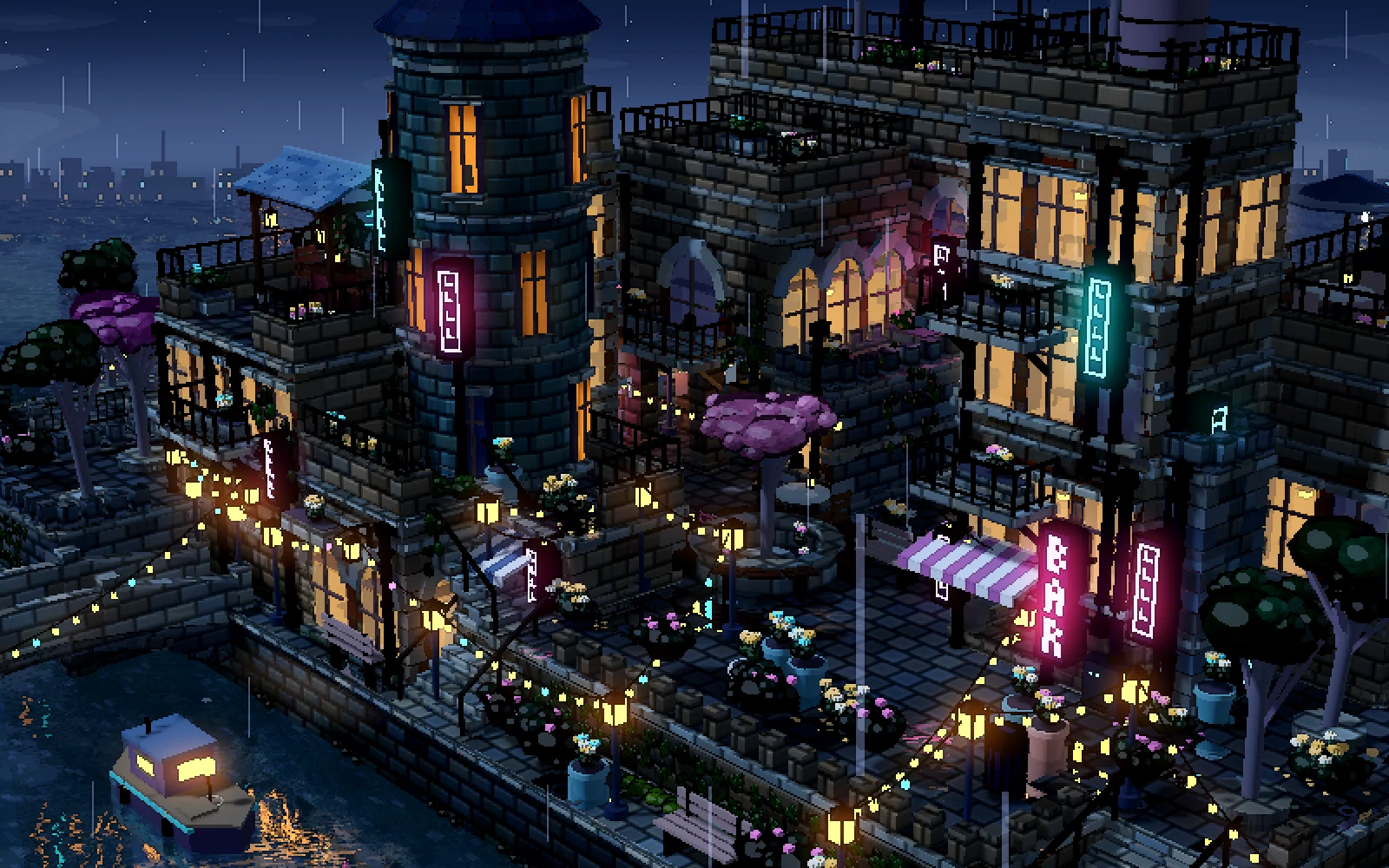
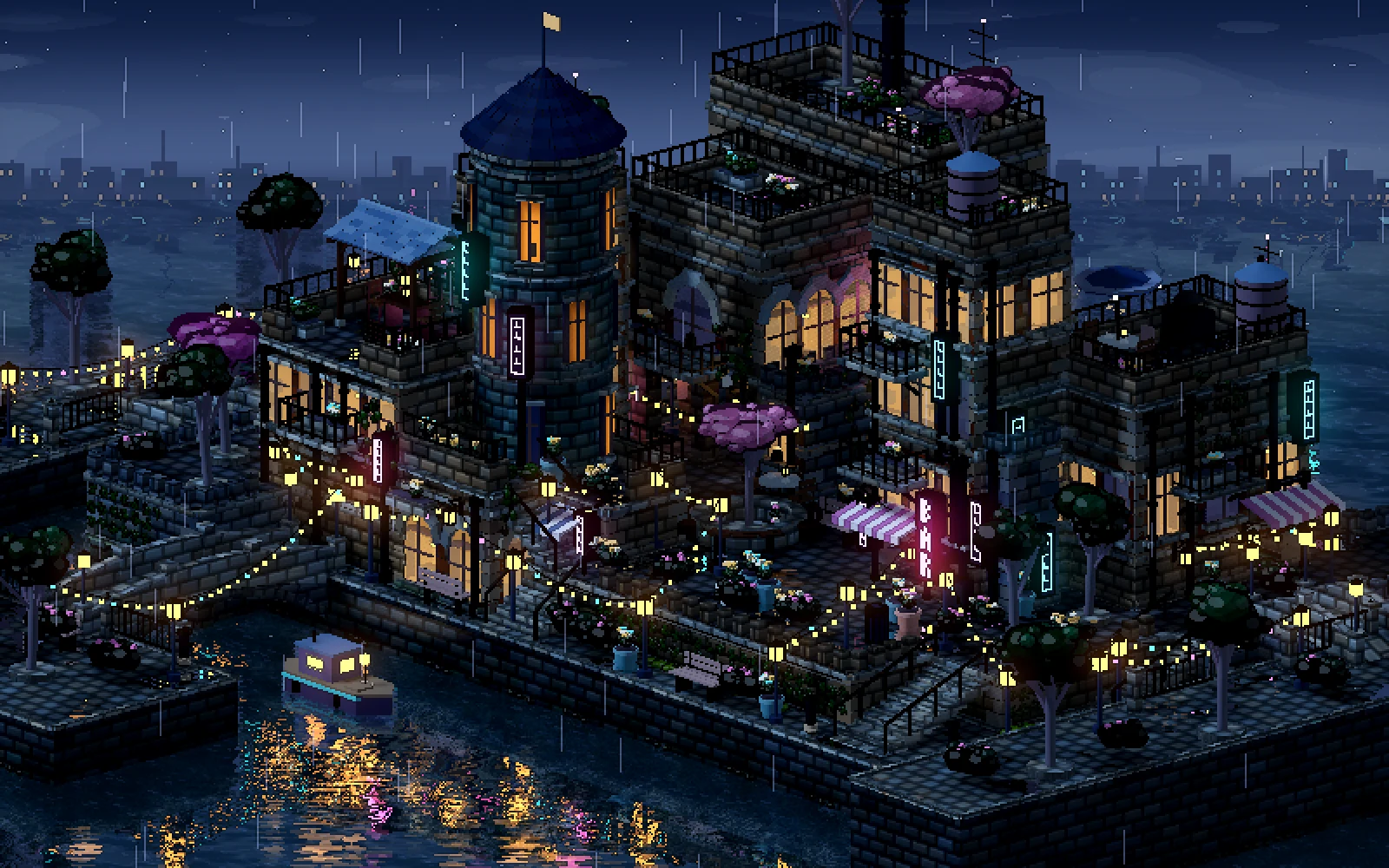
The close canal-quarter view shows the trade-off. Perspective enlarges the foreground and sends the tower’s top out of frame. Near water reflects less of the town because the rays look more steeply past the buildings. A camera that makes a model feel deeper can spoil a composition carefully made for orthographic projection.
Taking a photograph
Photo mode gained a pinned focus point, adjustable aperture and a free camera. Changing its field of view keeps the eye in place, while the Scenery field-of-view control keeps the framing at the target. Both behaviours make sense, but they answer different needs.
The cover is an archived photo-mode capture with perspective and depth of field. The blur gives the island a convincing model-scale feel. It still estimates depth from a plane through the focus point, so a nearby wall can blur as if it were ground. A low camera also exposes large texels and flat masonry because brick detail follows the orbit target rather than the eye.
Automated headless checks covered projection changes, handles, zoom and the photo controls. The recorded full suite had 17,367 checks with no failures. No hands-on windowed perspective session was recorded, and Windows was not run. Those limits matter for a change whose main question is how the camera feels.
What needs another look
The next pass has concrete work waiting: creatures in an ordinary launch, photo settings that leave the editing camera as they found it, and less work arriving on the frame when the mouse is released. Foliage batching and shader warm-up are on that list too.
The Glade look remained undecided. Calming the ground had helped, but the extra rendering cost and the colour choices still needed attention.
From the project notebook
This chapter draws on the project’s records as they stood on 24 September 2026.
- docs/visual-handoff.md · D1a and its review fix; D2a and review
- docs/tiny-glade-feel-handoff.md · D1/D2 results and 13:30 owner decisions
- artifacts/feel-journey/14-D1/pkg/ and 15-D2/pkg/