In this chapter
In this chapter
Build a home, find a resident
With the mallard’s appearance settled, work began on a population that responds to the scene’s geometry, capped at thirty creatures. Open water can support ducks, roofs and lamps offer pigeon perches, and paths give pigeons somewhere to walk. Sparrows use the smaller fittings, including lines, flags and nests.
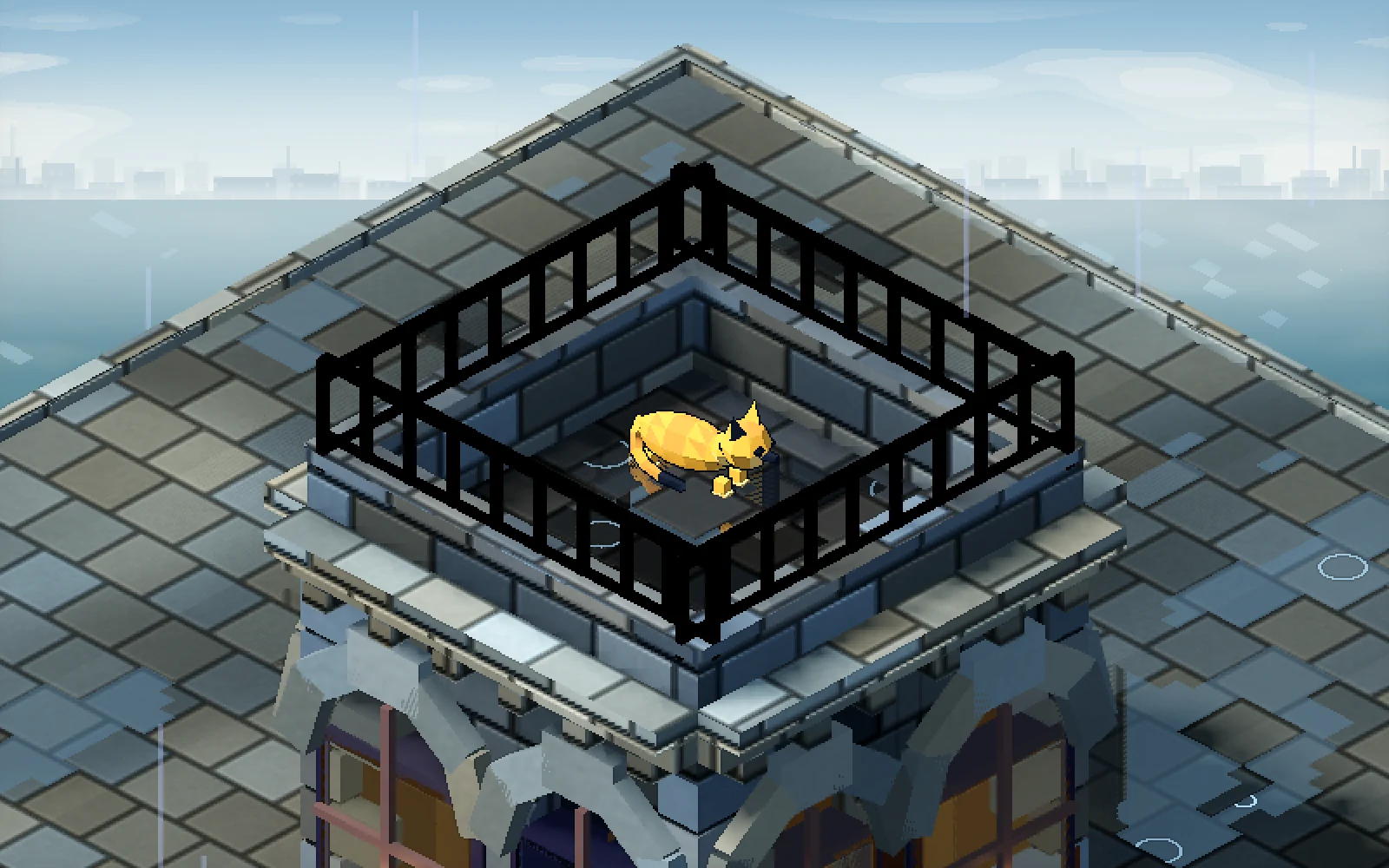
A cat looks for a sunny flat roof, a wall top or a quay. At night, water and foliage can attract fireflies, while lamps draw moths. Moving or removing those places means the habitat plan has to catch up.
Creatures stay out of the saved document and the undo stack. They respond to the town as it changes. In this early version they required the --creatures launch flag, so an ordinary launch showed none. The captures here were made with creatures enabled; making them appear in normal play was still to come.
Please don’t delete my roof
An edit within two metres can startle an animal. Click one and it can answer with a heart. Remove the cat’s support and it floats down with an umbrella, which is a fairly generous response to having your roof demolished.
The habitat rebuild is sliced into smaller jobs so it does not all land on one frame. Reactions to an edit can happen immediately, but the population finishes replanning about 1.2 seconds after the hand stops. A creature stuck for five seconds fades out and respawns.
That delay leaves visible compromises. Loading or forcing a scene sync can briefly put the old population over new land. When more than six parts are edited, the startle region uses their combined bounding box, which can frighten something sitting in the empty space between them.
The recorded creature CPU time on Harbour drag steps averaged roughly 0.36 to 0.39 milliseconds, with a p95 of 0.44 to 0.50. The tail still reached 1.08 milliseconds, and sculpt dabs reached 2.2. The average looked comfortable; the heavier cases remained worth watching.
A canvas with something to try
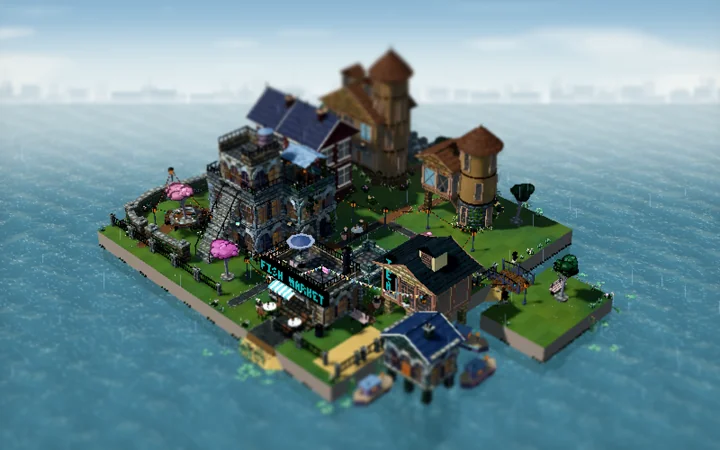
Four small starting scenes followed. An arch lane suggests painting a path to the house. A raised room introduces brackets. Laundry lane gives two neighbours enough room for a line, and a six-metre canal offers a place to try stepping stones.
Each starter is an ordinary scene and takes one undo step. A short suggestion points toward the useful gesture. New canvas cycles through the examples during the session, and Blank canvas remains an explicit option. The cycle starts again on the next launch.
The review found some teaching problems still in the pictures. The brackets were hard to read at the starter’s own zoom. The stepping-stone quays had no shore. Three captures were oddly framed and looked correct on a rerun, with the cause still unproven. A small tutorial scene needs its own visual checks even when all its parts work.
Ducks on an empty canvas
A blank canvas is all open water, which exposed a funny consequence of the habitat rules: the code could give it eight ducks before the player had built any land. This was a finding from reading the code, not a new observed game run.
On the afternoon of 24 September, the decision was to make ducks wait for land. Creatures would also be enabled during normal play, with a Scenery switch to turn them off. Those changes were planned after the version shown here.
From the project notebook
This chapter draws on the project’s records as they stood on 24 September 2026.
- docs/visual-handoff.md · C1a and C1b, including resumed review
- docs/visual-handoff.md · E1a starter scenes
- docs/tiny-glade-feel-handoff.md · 24 September results and 13:30 owner decisions