In this chapter
In this chapter
A plan for a castle
On 12 October the creator asked for castle exteriors and nothing inside: “no internals needed for this game”. The plan written that day surveyed a famous gothic castle on a loch as it appears in films, games and toy sets, and the real buildings used for filming, and kept only generic gothic and Highland pieces: no names, crests, house colours or statues from the source. It lists seven things that make such a castle read from a distance: one tower far taller than the rest, clusters of steep spires, a church-like hall inside the walls, a high crag, long bridges and walkways linking the parts, a plan that looks as if it grew over centuries, and warm lights at dusk. Two stages follow from it, the architecture and then the grounds. The creator took every recommendation on its ten questions, among them generic names only, a fixed set of four colours for stained glass, and the rubble stone they had tried out that day as the base of a ruined finish. The architecture stage ran from the early hours of 14 October to the afternoon of the 15th, with the bike redesign of the last chapter in the middle.
Spires, turrets and cupolas
The first part gave towers new roofs: a spire, a pyramid or an ogee as well as the cone, an eight-sided plan, a D-shaped plan with a flat back, finials from a ball to a spike, a fleur or a vane, and pinnacles as a kind of their own. Every new setting is optional and saved only when used, so a tower that uses none is drawn exactly as before. The review found that working out what stands on each tower’s cap walked every object in the scene once per tower, a cost that grew with towers times objects. After the fix the cap pieces are indexed once per update: 12 towers went from 1.53 to 0.13 milliseconds and 66 from 9.55 to 0.53. The suite passed with 29,383 checks.
The second part added bartizans, small corbelled turrets on a corner, and cupolas, open eight-sided lanterns on a ridge or a tower cap. One piece may stand on each spot, and the check now runs both ways, so an edit that would bring a vane or a pinnacle onto a cupola is refused, and a cupola keeps clear of a ridge’s ends. The suite passed with 29,525 checks.
Pointed windows and stained glass
Windows, houses, towers and drawn walls can now take pointed or round heads, groups of one to three lancets, tracery, and stained glass in four jewel tones: ruby, sapphire, emerald and amber. Each window mixes them from a seed of its own, so it keeps its colours through a move, a save and a load. A rose window of 1 to 4 metres is a new piece. Review found stained panes lit in unlit rooms and the rose slow to rebuild. The fixes light stained glass in its own window’s turn of the lamplighter’s round, seat windows on a jettied wall’s own plane, and cache the rose: a 2.6-metre rose went from 1.46 to 0.35 milliseconds a rebuild. The suite passed with 29,735 checks.
Buttresses, gargoyles, a clock and bells
Buttresses come as runs along a wall, one every 2 to 6 metres, with flying struts and pinnacles if wanted. Gargoyles are beasts at the eaves, and in rain each pours a thin stream from its mouth to whatever lies below. On a timber house a gargoyle takes a grey stone of its own. Two fix passes followed; the second makes a hall rebuild when a part on its face over a pier changes, and measures the streams again when the ground under them changes. The suite passed with 30,266 checks.
The next part added a clock face for a gable, a wall or a tower, with a pendulum if wanted, and a belfry of one to six bells that ring when the scene’s clock passes the hour. The bell is one synthesised voice, so nothing was downloaded, played 14 decibels under the ambience volume, and it rings only in a live session. The suite passed with 30,492 checks. Like every castle piece in this chapter, a scene that uses one does not open in a build from before it, though the save format stays at version 2.
A viaduct and a covered bridge
The eighth bridge style is a viaduct: a row of 3 to 21 stone arches, the count set by its two landings alone, with a grip to curve it and fire bowls along its parapet that cast no real light of their own. Review found it slow to draw. The fix cut one 60-metre viaduct’s draw from 8.03 to 5.48 milliseconds, and the castle test scene was rebuilt with six arches, five over open water, under a deck 9.4 metres high. The suite passed with 30,672 checks.
The ninth style is a covered timber bridge on trestles about every 4 metres, under a shingle roof, with lanterns every 3.5 metres and a gallery that sways by at most an art pixel. A stone walkway between two buildings can now take a roof, with a window in each bay that lights at night. On a stress scene, a width change to an ordinary timber bridge now costs 2.27 milliseconds more on release, which was accepted. The suite passed with 30,833 checks.
Rubble stone and a ruined finish
On 12 October the creator had tried a rubble stone on a separate copy of the game and chosen its look: a lighter, nearly neutral stone at a larger scale, set per building, tower or wall from a Finish row. That copy no longer merged cleanly, so early on 15 October its changes were brought into the main game by hand as a part of their own, keeping the creator’s choices, and reviewed like any part. Only a part set to rubble takes the new stone, so no existing scene changed colour. The fix pass laid rubble on a gable’s infill too, and two small fixes followed without another round. Changing a tower’s finish costs 2.65 milliseconds more on release, which was accepted. The suite passed with 31,110 checks.
The last architecture part dressed the battlements: machicolations, a band of stepped corbels standing 0.6 metres out under the head of a tower or wall, a portcullis raised or half down, and a third finish, Ruined, which breaks a wall with breaches and heaps of rubble and takes the cap off a ruined tower. Review found the crowns slow to look up. After the fixes, a scene with 12 crowns answers each in 0.098 milliseconds where one had taken 4.75. Adding machicolations or the ruined finish costs 10 to 14 milliseconds more on release while the build animation grows the new pieces in, which was accepted. The suite passed with 31,335 checks.
A castle to test the plan
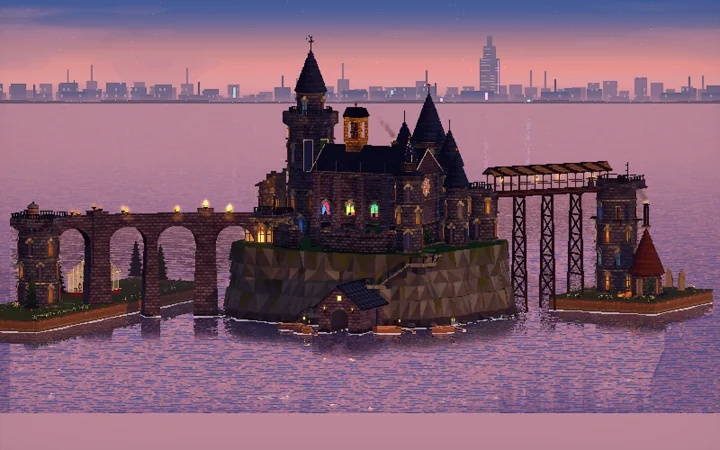
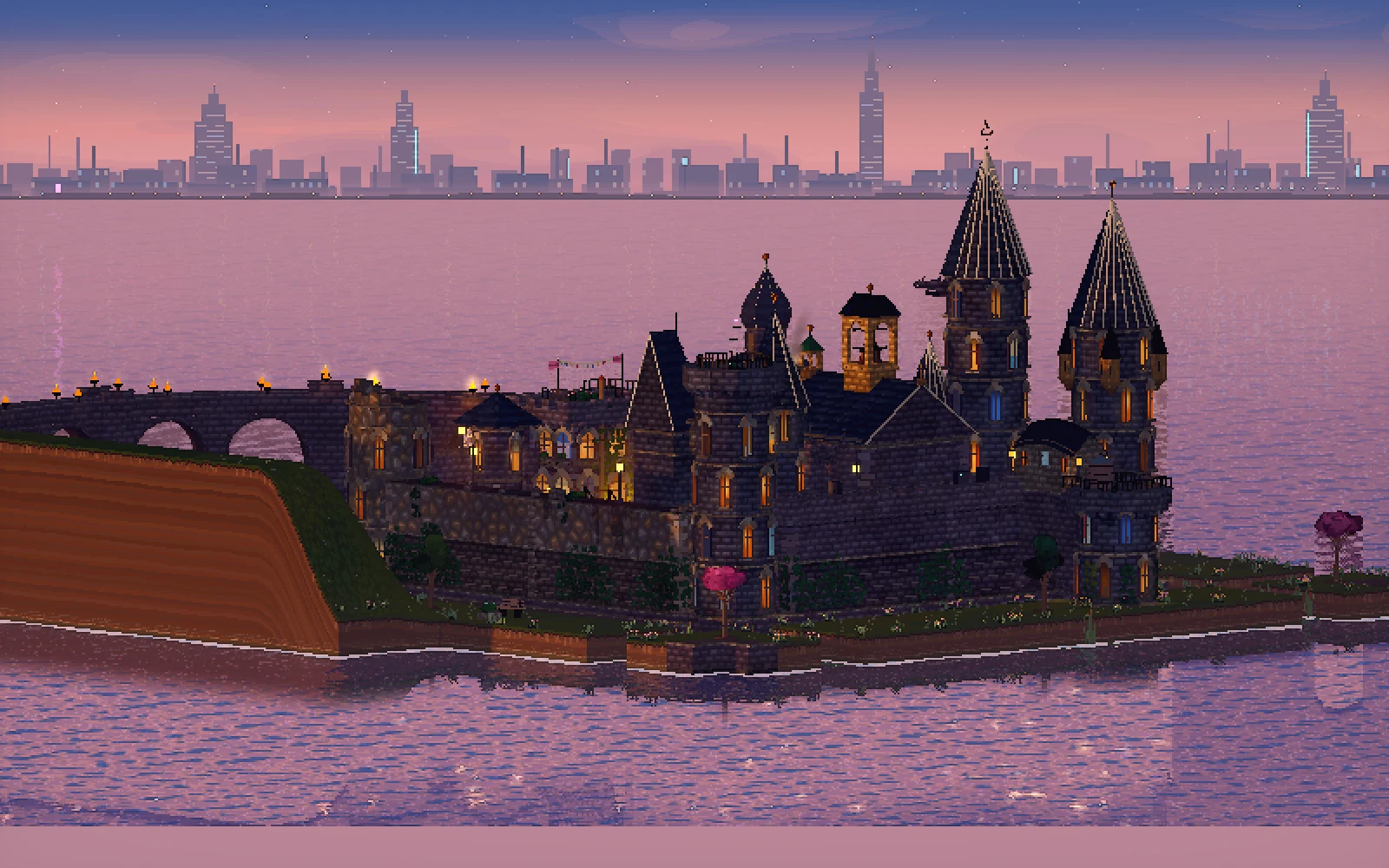
To close the stage, a castle of 121 pieces was built on the castle starter: twelve towers in the new forms, a stone hall with stained windows, a rose, buttresses, gargoyles, a belfry and a cupola, the viaduct with its fire bowls, a covered bridge, a roofed walkway, ruined curtain walls on the east side and rubble on the west. It was captured from three cameras by day and at 20:45, and each of the plan’s cues was judged. The height, the spire clusters, the grown plan and the warm lights read. The hall reads as a church among the towers, though its buttresses and gargoyles read only close up. The viaduct reads as a long link from every camera, but the covered bridge reads short and dark and the roofed walkway hides behind a curtain wall. The 20:45 sky is pink and violet, where the reference has a cool blue. The crag belongs to the grounds stage.
No starter changed: the journey’s counts were identical and the new stone reached no existing scene. The suite passed with 55 suites and 31,335 checks. On the dense scene the slowest 5 per cent of frames fell by 0.06 milliseconds. The Harbour’s grip drag measured 54.36 milliseconds against 53.37 on the copy from before the stage, with 53.7 as its baseline. The slider release rose 2.10 milliseconds, at the edge of its budget, and the dense scene’s first sync took 41 milliseconds longer, not yet traced to a part.
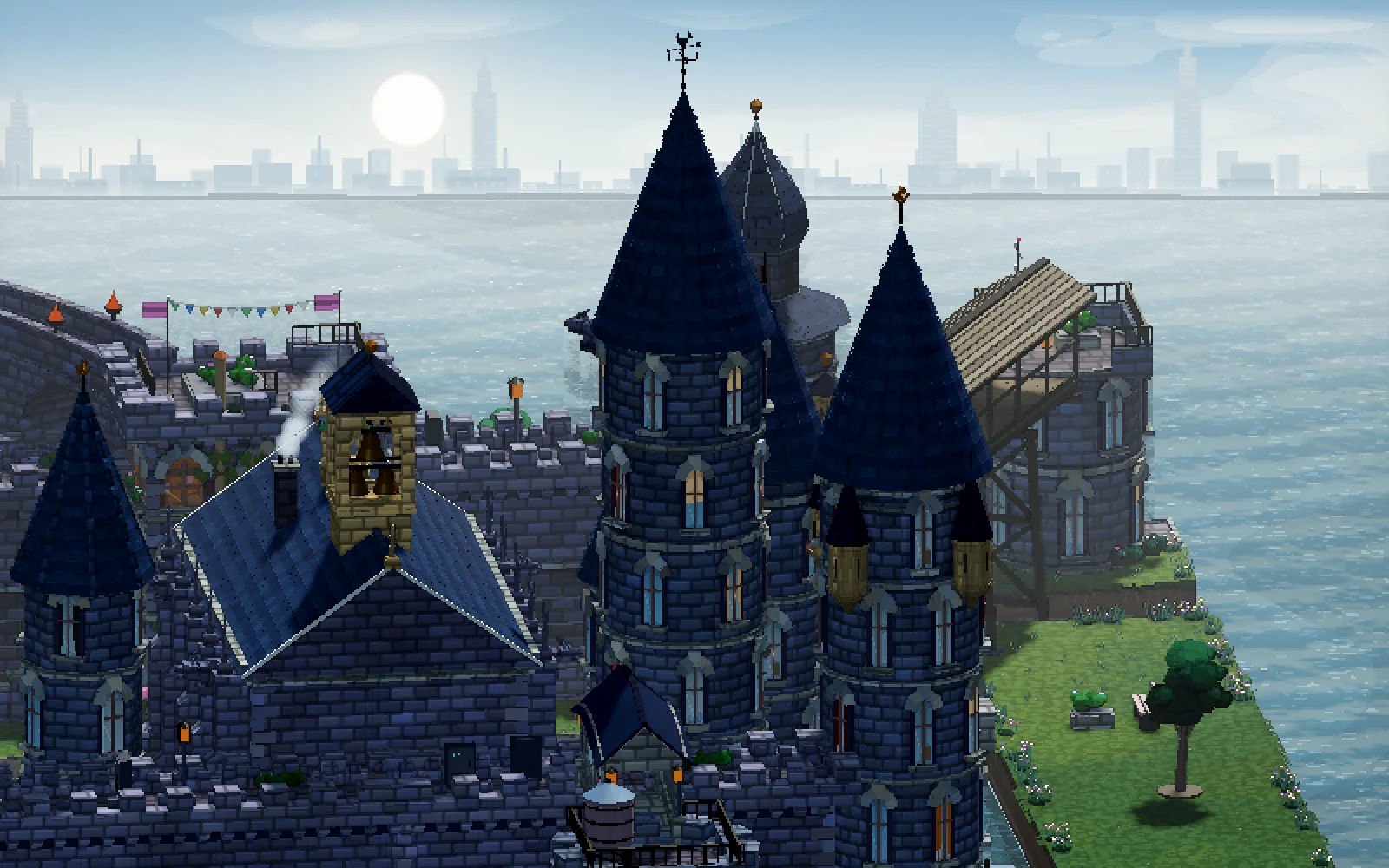
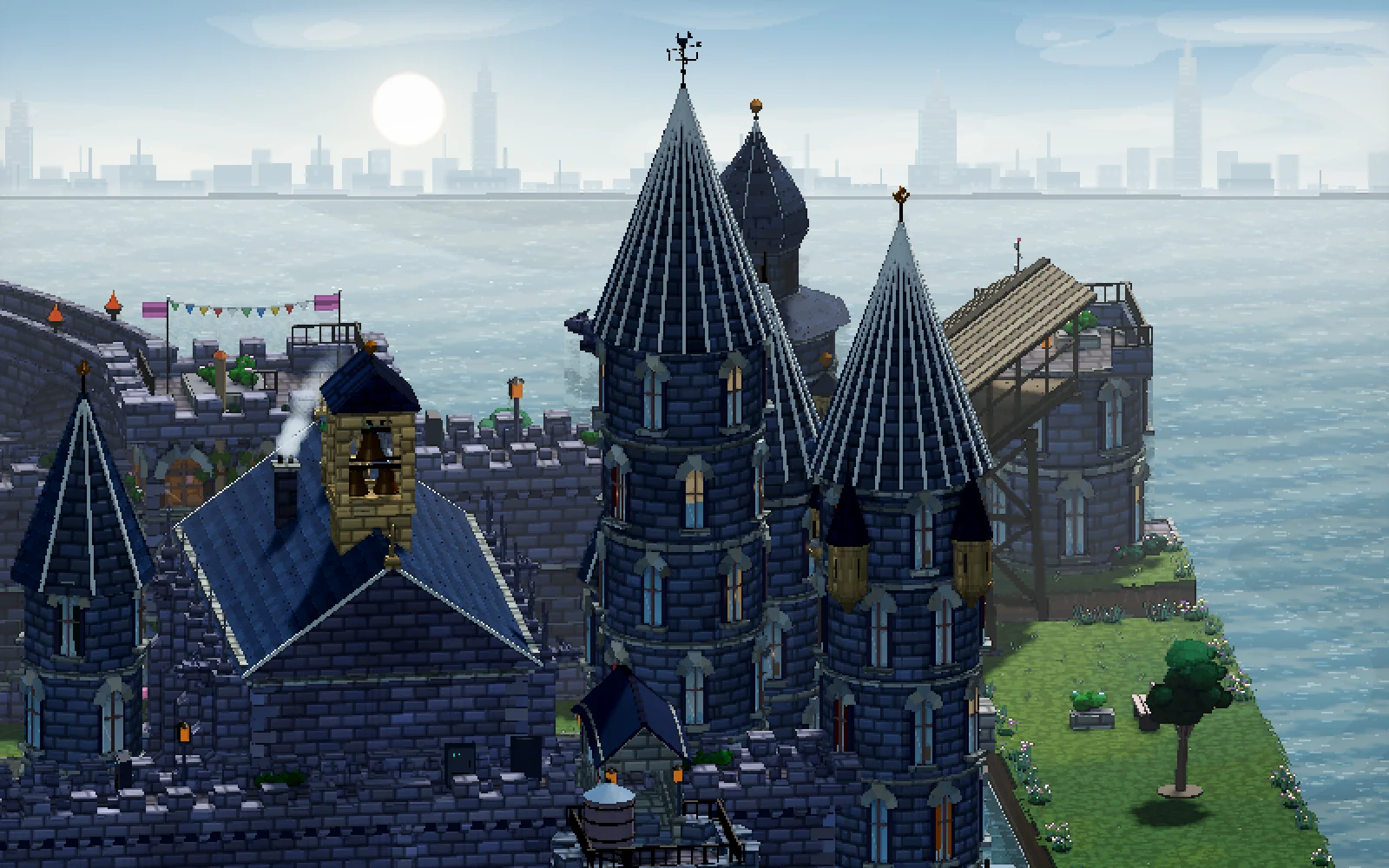
The close also found a fault any player turning the camera would meet: from the far side, the back halves of round spires were drawn in wall stone with pale seams up each facet. A small follow-up part tiled them in the roof’s slate. Of the 200 tower shapes its test draws, exactly 30 change, the fronts keep their tiles and no starter is touched. It also made each update open and close its own pass over the tower caps, so an error can no longer leave a stale index behind; reseated rose windows by the side of the building they belong to; and sends a cat napping on a wall that becomes ruined down to the ground with a hop, where it had floated over the broken stone. Editing such a tower costs 3.6 to 18.8 milliseconds more on release, for the extra tiles, which was accepted. The review found nothing to fix. The suite passed with 56 suites and 31,415 checks.
Where the work stands
The architecture stage’s eight parts, the rubble port and the follow-up part are built, reviewed and closed, and the stage was measured as a whole. At about 17:38 on 15 October the creator answered “All good and push”. That approved the four items on the stage’s sheet: gargoyles and pinnacles that stay dark beside rubble piers, a rubble half-gable on a D-shaped tower, slate piers beside a grey gargoyle on a timber hall, and the spire backs as fixed. The work was then pushed to the project’s repository, together with the first part of the grounds stage, which the next chapter covers. Many smaller notes were carried forward, among them that flying buttresses ignore the ground and water under their footings. The stage had no milestone, so nothing was exported and nothing was run on Windows.
From the project notebook
This chapter draws on the project’s records as they stood on 15 October 2026.
- docs/castle-elements-plan.md · The castle plan, its seven cues and the creator’s answers K1 to K10, intent only, 12 October
- docs/visual-handoff.md · Castle spires, caps, finials and pinnacles; bartizans and cupolas; gothic openings and stained glass entries, with their reviews and fix passes, 14 October
- docs/visual-handoff.md · Castle buttresses and gargoyles; clock face and belfry entries, with their reviews and fix passes, 14 October
- docs/visual-handoff.md · Castle viaduct; covered timber bridge and enclosed links entries, with their reviews and fix passes, 14 and 15 October
- docs/visual-handoff.md · Castle rubble finish port; battlement dressing and the ruined finish entries, with their reviews and fix passes, 15 October
- docs/visual-handoff.md · Castle architecture stage close and castle hardening entries, 15 October
- artifacts/decor/owner-decisions.md · The castle track and its answers of 12 October, the rulings from each review, and the creator’s approval of 15 October
- docs/decor-orchestration-handoff.md · State of the work, 14 and 15 October
- artifacts/decor/35-R7/ · Per-part tests, captures, sheets and costs, the test castle and the stage’s closing captures and sheets